

If you are new to managing your money seriously, 2026 is a genuinely better time to start than any year that came before it. Not because personal finance has gotten simpler — it has not — but because the tools available to beginners have made an unusual leap forward.
A new category of app has grown up around AI: tools that do not just display your financial data but actually explain it, answer questions about it, and help you understand your own situation in plain English. For someone who has always found finance confusing or anxiety-inducing, that shift matters.
This guide covers the best AI finance apps available to beginners in the USA right now, what each one actually does well, who each one is most suited for, and the honest limitations every beginner should know before choosing one.
One important note before we start: this guide describes what these apps do. It does not recommend any investment strategy, suggest which financial decisions to make, or advise you to move money anywhere. These are tools for understanding your finances. What you do with that understanding is your call.
What Makes an AI Finance App Actually Beginner-Friendly
Not every app that uses the word “AI” is built for someone who is new to this. Many are designed for people who already know what they are doing and want more powerful tools for doing it faster. Before looking at specific apps, it is worth knowing what separates a genuinely beginner-friendly tool from one that is just marketed that way.
• Plain language throughout. Not just in the marketing — in the actual interface, notifications, and explanations. If understanding what the app is telling you requires a financial background, it is not built for beginners.
• Low setup friction. A beginner should be able to connect their main accounts and see something useful within one session, without reading documentation or configuring complex settings.
• No overwhelming data. Dashboards with fifty metrics are not useful when you are just starting out. The best beginner tools surface the two or three things that are most relevant right now, not everything at once.
• Honest about what it can and cannot do. Apps that imply the AI will make financial decisions for you, or that suggest guaranteed outcomes, are a red flag at any level of experience.
• Security that does not require you to understand it. Read-only bank connections, clear data policies, and no requests for credentials beyond what is needed for viewing.
• A clear answer to: what do I do first? Beginners need somewhere to start. The best apps make that obvious.
The Best AI Finance Apps for Beginners in the USA: 2026
The apps below are assessed on beginner-friendliness, AI quality (does the AI actually know about your real accounts?), feature breadth, pricing, and any notable limitations. They are not ranked in order of overall quality — different tools suit different starting points.
1. WealthNX
Best for: All-in-one AI financial assistant with crypto and stocks
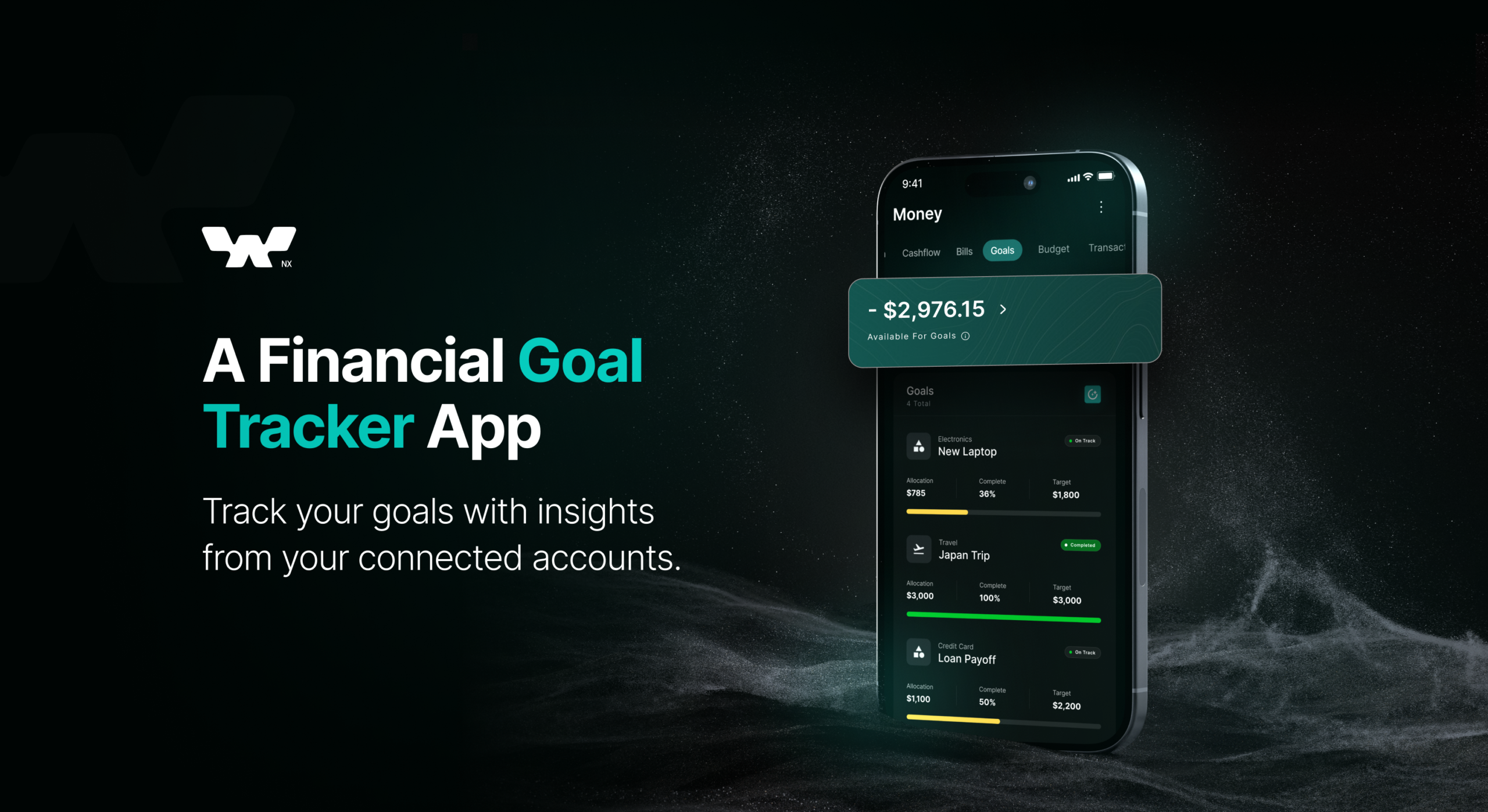
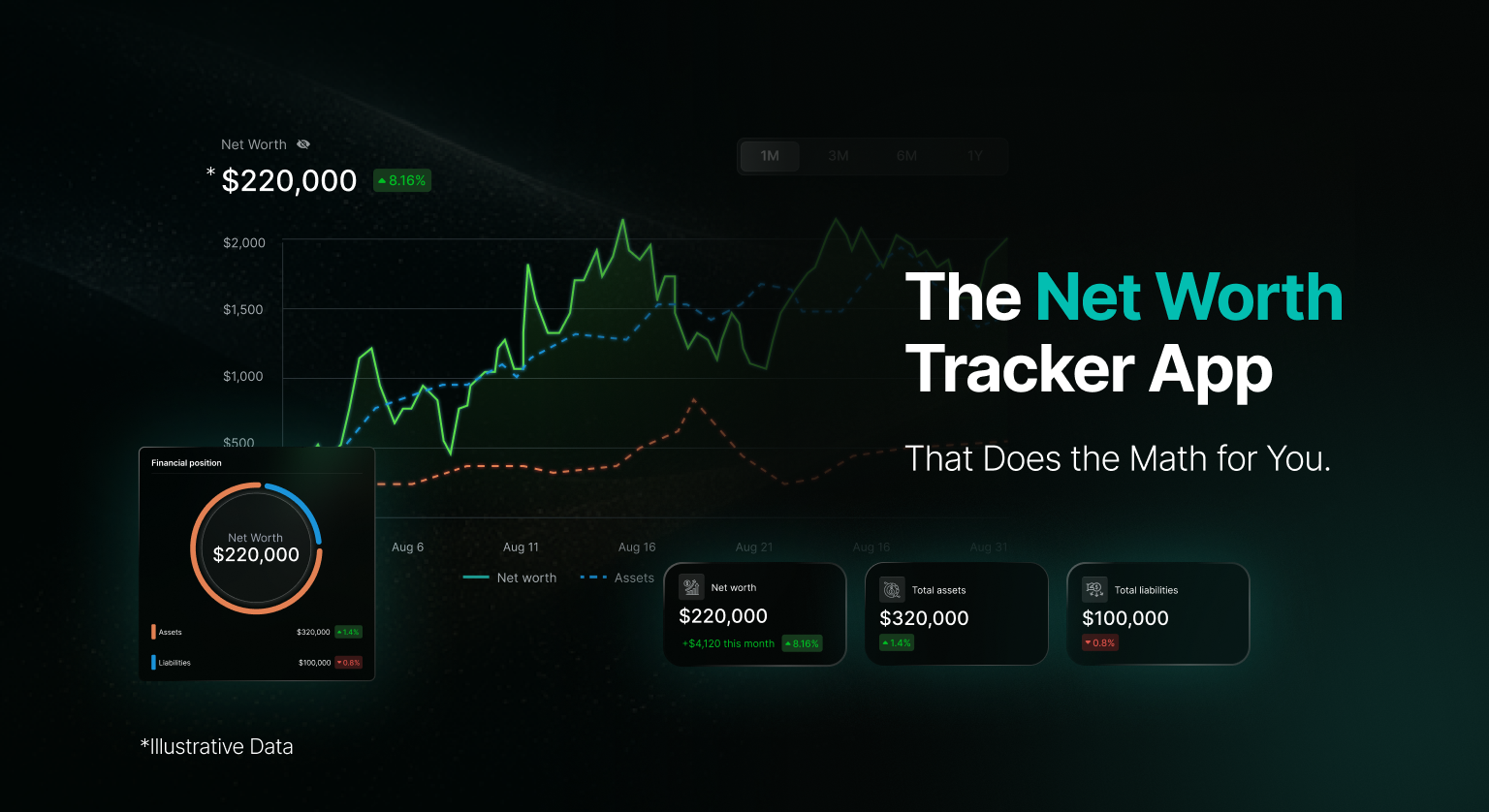
What it does: WealthNX AI is an AI-powered personal finance platform built to give you a complete, connected picture of your financial life — bank accounts, investments, crypto, and net worth — all in one place, with a conversational AI layer that answers real questions based on your actual data.
The AI experience: The standout feature for beginners is the ability to ask plain-English questions and get answers grounded in your own accounts. Not generic financial tips — actual observations about your spending patterns, your balance trends, and your overall financial position.
Crypto and stocks: One of the few tools that treats both as first-class citizens. Connect exchange accounts via read-only API keys, wallet addresses for on-chain balances, and traditional brokerage or bank accounts alongside each other.
Best for: Beginners who have both traditional finances and some crypto, or who want a single tool that grows with them as their financial life gets more complex.
Pricing: Free trial available. Paid plans for full AI and multi-account features. Check wealthnx.ai for current pricing.
Limitation: Newer platform, so the connection library for some smaller institutions is still expanding.
Read More: Best AI Portfolio Tracker Apps in the USA (2026)
2. Copilot
What it does: Copilot is a personal finance app that connects to your bank and investment accounts, categorises transactions automatically using machine learning, and provides a polished, clean dashboard with AI-written spending summaries. It is one of the most design-forward apps in the category.
The AI experience: Copilot’s AI surfaces monthly spending summaries in plain English, flags unusual charges, and learns from manual corrections over time. The categorisation accuracy improves the longer you use it.
Best for: Beginners who care about interface quality and want spending analysis to feel approachable rather than overwhelming. Strong on budgeting and subscription tracking.
Pricing: Paid subscription (around $13/month or $95/year as of 2026). Free trial available. No free tier.
Limitation: Does not support crypto tracking. iOS-first (Mac app available; no Android as of mid-2026). US accounts only.
3. Monarch Money
What it does: Monarch Money is a comprehensive budgeting and net worth app that added AI features in 2024–2025. It connects bank, investment, and loan accounts, offers collaborative features for couples or households, and uses AI to generate spending insights and flag budget variances.
The AI experience: Monarch’s AI Assistant can answer questions about your spending history, explain budget variances, and help you understand your financial position. It is more budgeting-oriented than investment-focused.
Best for: Beginners who are focused on budgeting and building financial habits, especially couples or households managing shared finances.
Pricing: Around $14.99/month or $99.99/year. Free trial available.
Limitation: No crypto support. AI features are newer and continue to evolve. Some users report sync issues with less common financial institutions.
4. Cleo
What it does: Cleo is a chat-based AI financial assistant that connects to your bank accounts and delivers financial insights through a conversational interface with an intentionally casual, sometimes humorous tone. It is aimed squarely at younger adults who are new to managing money.
The AI experience: Cleo responds to natural language questions about your spending, tracks categories, helps set savings goals, and provides weekly spending roasts or cheerleading depending on your preference. The tone is deliberately more like a friend than a financial advisor.
Best for: Beginners who have found traditional finance apps dry or intimidating, or who respond better to a conversational interface. Very accessible first step.
Pricing: Free tier available with basic features. Cleo Plus ($5.99/month) for budgeting tools, salary advance access, and credit building features.
Limitation: Bank account focused — does not track investments, crypto, or net worth. The AI is genuinely conversational but not deeply analytical. Better as a starting point than a long-term comprehensive tool.
5. YNAB (You Need a Budget)
What it does: YNAB is a long-established budgeting app built around a specific methodology: give every dollar a job. In 2025 it introduced Navi, an AI assistant that can answer questions about your budget, explain YNAB concepts, and surface spending observations based on your data.
The AI experience: Navi is primarily focused on helping you understand and use YNAB’s budgeting method. It can explain why your numbers look the way they do, answer questions about your spending categories, and guide beginners through the budgeting process. It is more educational than analytical.
Best for: Beginners who want to build real budgeting discipline and are willing to engage with a structured methodology. Strong community and learning resources.
Pricing: Around $14.99/month or $109/year. 34-day free trial.
Limitation: YNAB’s methodology requires more active participation than passive tracking apps. No investment or crypto tracking. The learning curve is steeper than other options on this list.
6. Rocket Money
What it does: Rocket Money (formerly Truebill) connects to your bank and credit card accounts, automatically identifies subscriptions and recurring charges, and uses AI to flag bills you might be paying too much on. It also offers a bill negotiation service for certain providers.
The AI experience: The AI layer is primarily focused on subscription detection and spending categorisation. It surfaces recurring charges you may have forgotten about and flags spending anomalies. Less conversational than some tools, more alert-driven.
Best for: Beginners whose main financial pain point is not knowing what they are paying for every month. Particularly effective for people with a lot of streaming, app, or subscription services.
Pricing: Free tier available. Rocket Money Premium ($6–$12/month, you choose) for full features including budgeting tools and bill negotiation.
Limitation: The AI is narrower in scope than some competitors — excellent at subscriptions and spending alerts, less useful for investment tracking or net worth. Bill negotiation service has mixed user reviews.
Quick Comparison: Which App Fits Your Starting Point
| App | Best for | Crypto | Investments | Free | Approx. monthly cost |
| WealthNX | Crypto + stocks + AI Q&A | Yes | Yes | No/7days free trial | Freemium |
| Copilot | Clean interface, spending analysis | No | Yes | No | ~$13/mo |
| Monarch Money | Budgeting, couples/households | No | Yes | No | ~$15/mo |
| Cleo | Conversational, casual tone | No | No | Yes | Free / $6/mo |
| YNAB | Structured budgeting discipline | No | No | No | ~$15/mo |
| Rocket Money | Subscription tracking, bill alerts | No | No | Yes | Free / $6–$12/mo |
No single app is best for every beginner. The right tool depends on where your financial life is right now and what you most need to understand about it.
How to Choose the Right App for Where You Are
The quickest way to pick is to identify your most immediate need. Here is a simple decision guide:
If you have crypto alongside traditional accounts
You need a tool that handles both without treating one as an afterthought. Most apps on this list do not support crypto. WealthNX is the option built for this from the ground up, with wallet address tracking, exchange API connections, and unified net worth across all asset types.
If budgeting is your main focus
YNAB and Monarch Money are the strongest options, with different approaches. YNAB requires more active engagement and teaches a specific methodology — it is more of a habit-building tool. Monarch is more passive and better suited to households or couples tracking shared finances.
If you are starting from zero and feel intimidated
Cleo is the lowest-friction entry point. The conversational interface and casual tone remove a lot of the anxiety that comes with looking at financial data seriously for the first time. It is not the most comprehensive tool, but it is the most approachable.
If subscriptions and bill creep are your biggest problem
Rocket Money is purpose-built for exactly this. The subscription detection is one of the most accurate in the category, and for someone who suspects they are losing money to forgotten charges, it delivers immediate visible value.
If interface quality matters to you
Copilot is the best-designed app in this list by a significant margin. If you have tried finance apps before and stopped using them because they felt cluttered or clinical, Copilot is worth trying. The trade-off is iOS-only and no crypto support.
What Beginners Usually Get Wrong About AI Finance Apps
A few common mistakes that are worth knowing about before you commit to a tool:
Expecting the AI to make decisions
AI finance apps explain your financial situation. They do not tell you what to do with your money, and any app that implies it will is overpromising. The job of the AI is to give you clearer information. The decisions are still yours.
Connecting only some accounts and trusting the full picture
A net worth figure or spending analysis that is missing three accounts is not accurate — it is a partial picture that feels complete. Connect everything relevant, or be conscious that what you are seeing is incomplete.
Giving up after the first week
Most AI finance apps improve with time. The first week involves connecting accounts, correcting miscategorised transactions, and getting a baseline established. The useful insights come after the AI has enough history to identify patterns. Four to six weeks is a fairer trial period than seven days.
Assuming free means full-featured
Free tiers are often genuinely limited. They are designed to give you a taste, not a complete tool. Check what the free tier actually includes before building a habit around features that require a paid plan.
Treating the AI as a financial advisor
An AI financial assistant can tell you that your dining spend went up 40% last month. It cannot tell you whether that is a problem given your income, your goals, and your broader financial situation. For personalised guidance, a human financial advisor is still the appropriate resource.
Security Basics Every Beginner Should Know
Connecting financial accounts to a third-party app is a decision that deserves a few minutes of due diligence. Here is what to check:
• Read-only access is the standard. A reputable finance app should connect to your accounts using read-only permissions. It can see your balances and transactions. It cannot move your money. Confirm this before connecting.
• Never share passwords. Legitimate apps connect via open banking APIs or equivalent services (like Plaid in the US) that let you authorise access directly with your bank, without sharing your credentials with the app.
• For crypto: read-only API keys only. When generating API keys for exchange connections, ensure the key has view-only or read-only permissions with no trading or withdrawal rights. For wallets, share your public address only, never your private key or seed phrase.
• Check the privacy policy. Understand whether the app sells or shares your financial data, and what happens to your data if you cancel.
• Use a strong, unique password for the finance app itself and enable two-factor authentication wherever available.
Honest Summary: What These Apps Can and Cannot Do
| Can do | Cannot do |
| Connect multiple account types in one place | Make financial decisions on your behalf |
| Explain spending patterns in plain English | Guarantee any financial outcome |
| Track net worth automatically across connected accounts | Provide personalised financial advice |
| Surface subscriptions and recurring charges | Account for context the data does not contain |
| Answer questions about your actual financial data | Replace a qualified financial advisor |
| Improve accuracy over time with corrections | Be more accurate than their data connections |
The Honest Summary
AI finance apps for beginners in 2026 are the most capable they have ever been, and genuinely more accessible than the generation of apps that came before them. The shift from dashboard-plus-charts to conversation-plus-context is real, and for someone who has always found money management confusing, that shift matters.
The right app depends on your starting point. If you have crypto alongside traditional accounts and want one tool that handles all of it, WealthNX is built for exactly that. If you want structured budgeting with discipline, YNAB. If you want the easiest possible entry point, Cleo. If you want the best-designed interface, Copilot. If subscriptions are your first problem to solve, Rocket Money.
Whatever you choose: connect your real accounts, give it a month, and judge by whether it tells you something true about your financial situation that you did not already know. That is the only test that matters.
Frequently Asked Questions
What is the best AI finance app for beginners in the USA?
There is no single best app — the right choice depends on your financial situation. For beginners with both traditional accounts and crypto, WealthNX offers the most complete coverage. For budgeting-focused beginners, YNAB or Monarch Money. For the most approachable first step, Cleo. For subscription tracking, Rocket Money. For the cleanest interface, Copilot.
Are AI finance apps safe to use?
Reputable AI finance apps use read-only connections, meaning they can see your account data but cannot move money. Most US-based tools connect via Plaid or similar services that authenticate directly with your bank. Before connecting, confirm the app uses read-only access and has a clear privacy policy. Never share your bank password or crypto private keys directly with any app.
Do I need to pay for an AI finance app to get real value?
Free tiers on apps like WealthNX, Cleo, and Rocket Money provide genuine value, though with feature limitations. Paid tiers typically unlock full AI features, unlimited account connections, and more detailed analytics. Most paid apps offer a free trial long enough to evaluate whether the paid features are worth it before committing.
Can these apps help with crypto as well as regular bank accounts?
Most AI finance apps do not support crypto. WealthNX is the strongest option for beginners who hold both, with support for exchange API connections and public wallet address tracking across multiple chains, alongside traditional bank and investment accounts.
Will an AI finance app tell me what to invest in?
No — and any app that claims to is overpromising. AI finance apps organise and explain your financial data. They do not provide investment recommendations, predict market movements, or advise on asset allocation. For personalised investment guidance, consult a licensed financial advisor.
How long does it take to see useful results from an AI finance app?
Most people start seeing useful spending insights within two to four weeks, once the app has enough transaction history to identify patterns. The first week is primarily setup: connecting accounts, correcting any miscategorised transactions, and establishing a baseline. A realistic evaluation period is four to six weeks, not seven days.
Disclaimer
This article is for general informational and educational purposes only. It does not constitute financial advice, investment advice, tax advice, or any form of personalised financial guidance. App descriptions, pricing, and features reflect publicly available information as of June 2026 and are subject to change. Always verify current details directly with the relevant provider.
The inclusion of any app in this guide does not constitute an endorsement. WealthNX is a product of the publisher of this blog. All other apps are described based on publicly available information. No compensation was received for any listing.
AI financial assistants are organisational and analytical tools. They do not manage assets, execute transactions, or provide personalised financial recommendations. For advice tailored to your personal financial situation, consult a licensed financial advisor or qualified professional.