

Quick Answer
A good net worth tracker needs full account connectivity across bank, investment, crypto, and debt accounts; automatic updates from connected sources; a trend view over time; read only access for security; and plain language observations. Anything that only shows assets without liabilities is not tracking net worth, it is tracking gross assets with a friendlier label.
There is a version of this question with a deceptively simple answer: a net worth tracker should track your net worth. That sounds obvious until you look at what most apps actually do, and notice how many of them only show you the positive side of the equation.
Net worth is assets minus liabilities. Every dollar you own minus every dollar you owe. Getting that number right requires connecting both sides of the ledger, which most people realize is harder than expected the first time they try it. Bank accounts live in one place, a 401k lives somewhere else, a crypto wallet lives somewhere else entirely, and the mortgage balance lives at yet another institution that may or may not have a clean digital connection.
A genuinely useful net worth tracker handles all of that in one place, automatically, and presents the result in a way that does not require a finance degree to interpret. Here is the full list of features that separate the apps that actually do the job from the ones that just look good in screenshots.
The Features That Actually Matter
• Connects to all your account types, not just the obvious ones
Bank and savings accounts are the easy part. A proper net worth tracker should also connect to workplace retirement accounts like a 401k or IRA, brokerage accounts, and if you hold it, cryptocurrency through secure exchange API connections and public wallet address tracking. Any category left out produces a number that flatters your actual position. An old 401k from a previous job, a crypto wallet you set up two years ago, or a credit card at a bank you rarely check are all part of the real number whether or not the app can see them.
• Includes liabilities alongside assets
This is the feature most people forget to check and the one that matters most. Net worth is not your savings balance plus your investment portfolio. It is those numbers minus your mortgage, your car loan, your credit card balances, your student debt, and any other outstanding obligations. An app that tracks assets without liabilities will always show a number that looks better than reality. Look specifically for whether the app connects to loan accounts and credit cards, not just savings and brokerage platforms.
• Updates automatically from connected accounts
A net worth tracker that requires manual entry defeats the purpose of having one. Prices change, balances move, and a number you typed three weeks ago is not your net worth today. The best trackers pull data automatically from connected accounts, giving you the latest available figure from each source without requiring you to log in to five different platforms and add up the results yourself. The data reflects the latest available information from each connection, which may not be real time for every institution, but it is consistently more current than anything maintained by hand.
• Shows a trend over time, not just today’s number
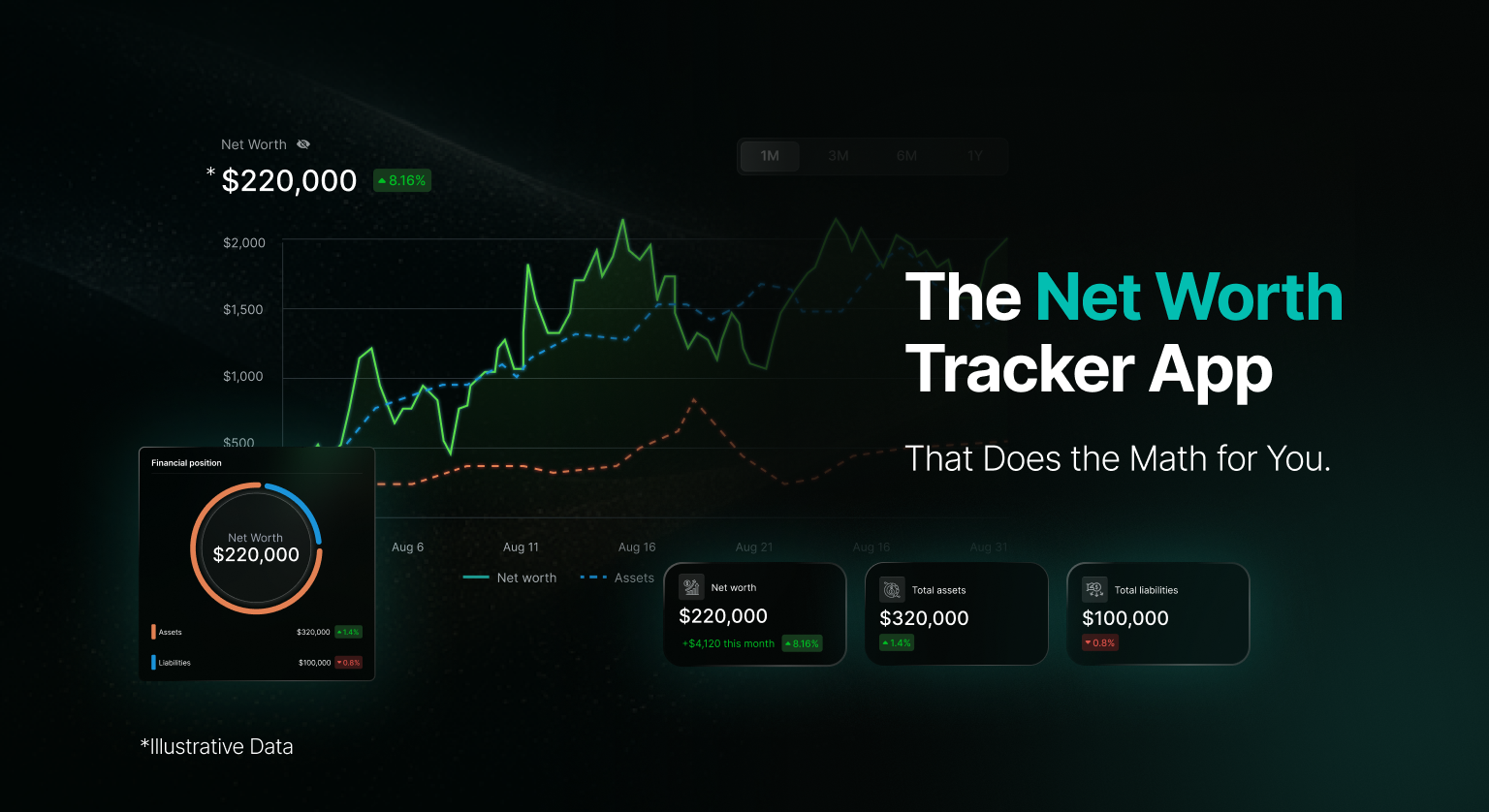
A single figure on a single day tells you almost nothing on its own. The far more useful question is whether your net worth has been moving up, down, or sideways over the past six months. A dip after a large purchase looks very different from a steady decline over a year, and only a chart or a month-by-month view makes that distinction visible. Any tracker worth using should show your number across time, not just as a snapshot.
• Uses read only connections for every linked account
Security matters more here than with almost any other category of app, because you are giving this tool a view of your entire financial life. A trustworthy tracker connects through read only access, meaning it can see your balances and transaction history but cannot move money, execute trades, or take any action on your behalf. For bank accounts this is typically handled through a service like Plaid. For crypto exchanges it means a view only API key with no trading or withdrawal permissions. For wallets it means your public address, never your private key or seed phrase. If an app asks for your actual banking login credentials typed directly into its own interface, close it.
• Handles cryptocurrency accurately, not just as a price display
Showing the current price of Bitcoin is not the same as tracking your actual crypto holdings. A proper net worth tracker needs to know how much you hold, not just what the price is. That means connecting to exchange accounts to read actual balances, tracking wallet addresses on chain for holdings in self custody, and ideally supporting multi chain activity if your holdings span more than one blockchain. Cost basis tracking, knowing what you originally paid, matters too, both for understanding whether you have gained or lost and for tax record purposes. Cryptocurrencies are highly volatile and their values in a connected net worth figure will move accordingly.
• Gives you observations in plain language, not just numbers
A number on a screen is not the same as understanding your financial position. The best net worth trackers, particularly those with an AI layer, go further than displaying figures. They surface observations about what the data shows, written in plain English that does not require a finance background to parse. Something like an observation that your net worth has grown 8 percent over the past six months, with investment accounts driving most of that movement, is more useful than a line chart with no explanation. All such observations should be clearly informational only, not financial advice.
• Has a clear privacy policy that says your data is not sold
A net worth tracker sees your entire financial life: every account balance, every debt, everything you own and owe. Before connecting anything, check what the company does with that data. A responsible provider will state clearly in its privacy policy that financial data is not sold to third parties. Vague language about sharing with trusted partners or using data for service improvement without specifics is a reason to read more carefully before proceeding.
• Holds recognized security certifications
Security certifications like ISO 27001 are not just marketing badges. ISO 27001 is an internationally recognized standard for information security management that requires an independent audit of how a company stores, protects, and handles sensitive data. It is time limited and requires ongoing compliance to maintain. For an app that holds a connected view of your entire financial life, verifying that the company holds a real certification from a real auditing body is a reasonable step before connecting.
Features That Sound Useful but Often Deliver Less Than Expected
Not every feature in a net worth tracker’s marketing list earns its place. A few deserve closer scrutiny.
Goal tracking
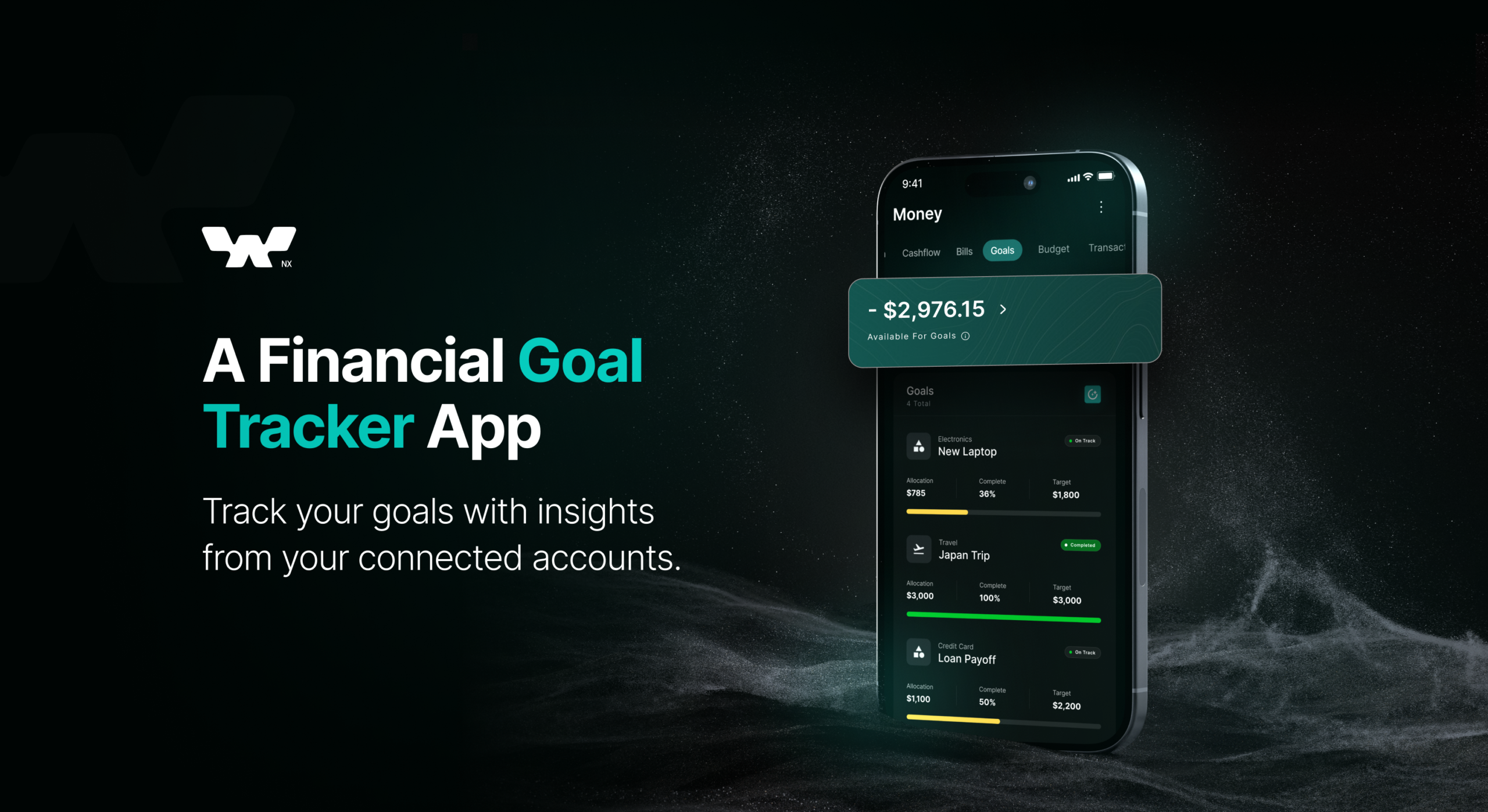
Many trackers offer the ability to set a net worth target and track progress toward it. In practice, this feature is most useful if the target is realistic and the underlying data is accurate. A goal tracker built on a connected net worth figure that is missing half your debt is tracking progress toward the wrong number.
Budgeting tools built in
Some trackers try to combine net worth tracking with monthly budgeting in a single interface. Both are useful, but combining them can clutter the experience for someone who only wants to see the net worth picture clearly. Whether this combination helps or hinders depends on how the app handles it. A clean separation between the net worth view and the spending view tends to work better than a single dashboard trying to do both at once.
AI chat that is not grounded in your data
Some apps market an AI assistant that can answer financial questions, but produce generic responses rather than answers drawn from your actual connected account data. The test is straightforward: ask something specific about your own accounts. If the answer could have been written without knowing anything about you, the AI is not connected to your data in a meaningful way.
How WealthNX Covers These Features
WealthNX was built specifically around the problem this article describes. It connects bank accounts, investment accounts, and cryptocurrency exchanges and wallets through read only access, pulls liabilities alongside assets, and presents the connected net worth figure with a trend view over time. An AI assistant layer surfaces informational observations about what the connected data shows in plain language.
WealthNX holds ISO 27001 certification, the internationally recognized standard for information security management, and states clearly in its privacy policy that financial data is not sold to third parties. Multi factor authentication is available on every account. WealthNX is the publisher of this blog, so this is named here openly as a recommendation rather than presented as an independent review. The same test applies here as with any other app: connect real accounts and verify that what it shows you is accurate before relying on it.
The best net worth tracker is not the one with the longest feature list. It is the one that shows you an accurate number, explains what it means, keeps your data safe, and is simple enough that you come back to it regularly.
A Quick Feature Checklist
| Feature | Why it matters | What to check |
| Full account coverage | Partial connections produce partial numbers | Bank, investments, crypto, and liabilities all supported |
| Liabilities included | Net worth without debt is not net worth | Mortgage, loans, and credit cards connectable |
| Automatic updates | Manual entry always falls behind | Data pulls from connected accounts without action from you |
| Trend over time | Direction matters more than any single figure | Monthly or historical net worth chart visible |
| Read only access | The app should never be able to move your money | Confirmed in security documentation |
| Crypto support | Holdings tracked, not just prices | Exchange API keys and wallet address connections |
| ISO 27001 or SOC 2 | Independent audit of security practices | Verifiable certification from named auditing body |
| Clear privacy policy | Your data should not be sold | Plain statement, not vague partner language |
The Honest Takeaway
A net worth tracker worth using does four things well: it connects your full financial picture across every account type including debts, it keeps that picture current automatically, it shows you how the number is moving over time, and it handles your data with the kind of security practices you would expect from an app that can see everything you own and owe.
Most of the features beyond those four are either genuinely useful additions or noise. The checklist above gives you a fast way to work through any app before committing to it. Take the time at the start and you will end up with a number you can actually trust.
Frequently Asked Questions
What is the most important feature in a net worth tracker?
Including liabilities alongside assets. Net worth is assets minus liabilities, and any tracker that shows only the asset side is producing a number that systematically overstates your actual financial position. The second most important is automatic updates from connected accounts, since a manually maintained figure is almost always out of date.
Does a net worth tracker need to handle cryptocurrency?
Only if you hold any. If you do, the app should connect to your exchange accounts through read only API keys and track wallet balances through public addresses. An app that only shows the price of a cryptocurrency without knowing your actual holdings is not tracking your crypto net worth.
How do I know if a net worth tracker is secure?
Look for three things: read only connections confirmed in the security documentation, a privacy policy that clearly states your financial data is not sold, and an independent security certification such as ISO 27001. These are checkable before you connect a single account.
How often does a net worth tracker update?
It depends on the app and the institution. Most bank and investment connections update daily or when transactions occur. Crypto pricing updates more frequently. Some retirement accounts sync less often. The data reflects the latest available information from each connected source, which is almost always more current than a manually maintained spreadsheet.
Sources
• Western & Southern Financial Group survey, reported via InvestmentNews, 2026.
• Federal Reserve, Survey of Consumer Finances, 2022 data, released October 2023.
• Javelin Strategy and Research, 2026 Identity Fraud Study.
Disclaimer
This article is for general informational and educational purposes only and does not constitute financial advice. WealthNX is the publisher of this blog and is named here as a recommended app; this recommendation is disclosed openly and is not an independent review. WealthNX holds ISO 27001 certification, the internationally recognized standard for information security management.
All AI generated observations from finance apps are informational only and are not personalised financial advice. Responses are generated from connected account data and may be affected by incomplete or delayed information. Cryptocurrencies are highly volatile. For advice tailored to your situation, consult a licensed financial advisor.