
Quick Answer
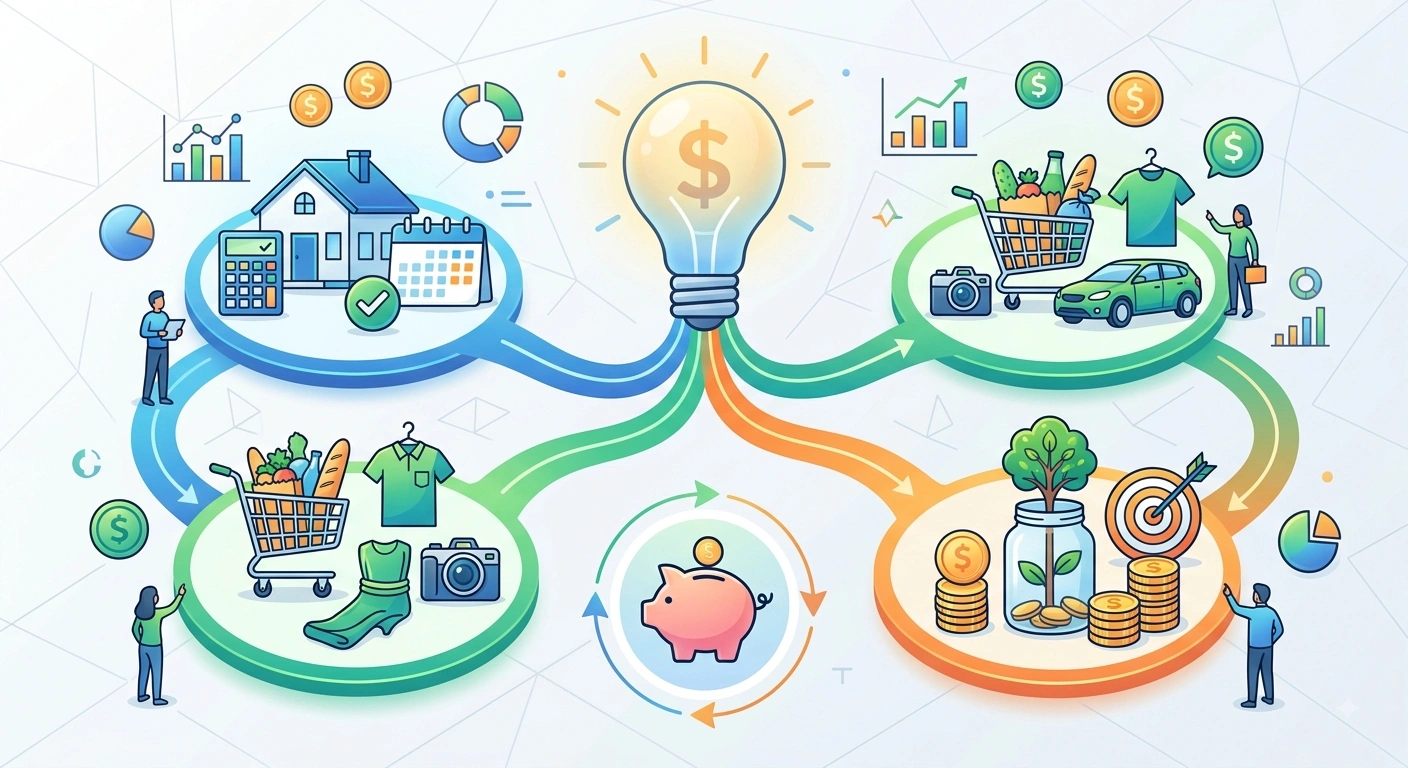
Flexible expenses are costs that happen regularly but vary in amount from month to month based on your choices and behaviour. They are neither fixed, like rent which stays the same, nor one-off, like an emergency car repair. Food, dining out, entertainment, clothing, fuel, and personal care are common examples. They are also the category where most budgets have the most room to move, which makes them worth understanding clearly.
Many people who try to build a budget get the fixed expenses right fairly easily. Rent, phone bill, car payment, internet, those are the same every month and easy to write down. The category that tends to trip things up is everything else, the spending that fluctuates, the amounts that feel unpredictable, and the costs that seem small individually but add up faster than expected.
That category has a name: flexible expenses. They are not emergencies and they are not fixed. They are the ordinary, recurring costs of everyday life that change based on what you do, what you choose, and what comes up. Understanding them clearly is one of the more practical things anyone can do for their financial picture, because flexible expenses are typically where most of the adjustable spending power actually lives.
According to a Bankrate survey published in 2025, 54 percent of US adults said they expected to spend less on travel, dining out, and entertainment in 2025 than the year before, up from 49 percent who said the same thing the prior year. The fact that so many people are actively thinking about cutting these specific categories makes sense. They are the ones you can actually move.
Fixed Expenses vs Flexible Expenses vs Irregular Expenses
These three categories cover almost every dollar that leaves an account. Knowing which is which makes a budget easier to build and much easier to use.
| Type | What it is | Examples |
| Fixed expenses | Same amount, same frequency, every month | Rent, mortgage, car payment, internet, insurance premium, gym membership |
| Flexible expenses | Recurring but the amount varies based on behaviour and choices | Groceries, dining out, fuel, utilities, clothing, entertainment, personal care |
| Irregular expenses | Predictable but not monthly, often forgotten in budgets | Annual insurance renewal, car registration, holiday gifts, vet bills, home repairs |
Flexible expenses are the middle layer. They are not as locked in as fixed costs, which means they respond to decisions, and not as surprising as irregular ones, which means they show up in some form every single month.
Examples of Flexible Expenses
The list below covers the categories that show up most often. Each one has a real life note about where the variability tends to come from and what it is easy to underestimate.
• Groceries
Examples: Supermarket runs, bulk store purchases, meal kits, household supplies bought alongside food
Real life note: Grocery spending tends to drift upward gradually rather than spiking visibly. A slightly more expensive brand here, an extra item there, and the weekly shop ends up noticeably higher than it was six months ago without any single clear decision causing it.
• Dining out and food delivery
Examples: Restaurants, cafes, fast food, takeaway, food delivery apps, work lunches
Real life note: Food delivery apps deserve specific attention here. Individual orders are small enough to feel low stakes, but two or three deliveries a week accumulates into a surprisingly large monthly total. The Empower Wealth Watch report found restaurant spending among Americans rose nearly 9 percent in 2025.
• Fuel and transport
Examples: Petrol, parking, ride-sharing apps, public transit top-ups, tolls
Real life note: Fuel costs vary with price fluctuations and how much driving actually happens in a given month. Ride-sharing tends to be underestimated in this category: individual trips feel low stakes but the monthly total can accumulate more quickly than expected for regular users.
• Utilities
Examples: Electricity, gas, water
Real life note: Utilities are technically recurring but vary enough seasonally to behave like a flexible expense for practical purposes. A summer electricity bill in a warm climate and a winter heating bill in a cold one can differ significantly from the monthly average.
• Entertainment
Examples: Streaming services beyond a fixed subscription tier, concerts, cinema, sports events, hobbies, games
Real life note: The Empower report found that spending on hobbies rose more than 16 percent in 2025, one of the fastest increases across all categories. Entertainment is one of the most elastic categories in a budget, meaning it can expand quietly without feeling like a deliberate choice.
• Clothing and personal care
Examples: Clothes, shoes, haircuts, toiletries, cosmetics, gym classes beyond a fixed membership
Real life note: Clothing is frequently budgeted too low. A realistic annual spend divided by twelve gives a more honest monthly figure than a round number that sounds sensible but regularly gets exceeded in a single shopping trip.
• Health and wellness
Examples: Copays, prescriptions not covered by insurance, over the counter medication, therapy sessions
Real life note: Healthcare spending can be more variable than a flat monthly estimate accounts for. A month with a GP visit, a prescription refill, and a physiotherapy session can cost significantly more than a month where nothing medical comes up.
Why Flexible Expenses Are Where Most Budgets Either Work or Break
Fixed expenses do not leave much room for adjustment in the short term. You either pay rent or you do not. Irregular expenses are important to plan for but they do not require constant attention. Flexible expenses are different. They are the spending category that responds most directly to the decisions you make each week, which means they are both the most adjustable part of a budget and the hardest to track accurately.
A Deloitte consumer spending report from December 2025 found that discretionary spending intentions in the US remained well below 2021 levels, while nondiscretionary spending intentions continued to climb. The pattern reflects something a lot of people feel directly: the fixed costs keep rising, and the flexible ones are where the adjustment has to happen.
Flexible expenses are not the problem part of a budget. They are the part with the most room. The goal is not to eliminate them but to see them clearly enough to make actual choices about them.
How to Track Flexible Expenses Without It Becoming a Full-Time Job
Look back before you plan forward
The single most useful thing you can do with flexible expenses is look at what you actually spent in each category over the past three months rather than guessing at a number that sounds reasonable. Many people consistently underestimate food delivery, clothing, and entertainment, and overestimate how much they spend on things like personal care. Three months of real data gives you a starting point that reflects your actual behaviour rather than your aspirational version of it.
Keep category definitions consistent
A grocery run that includes cleaning supplies and toiletries alongside food can create confusion about which category to count it under. Decide on a consistent rule, for example, anything from a supermarket goes under groceries regardless of what it is, and stick to it. Consistency matters more than perfect categorisation.
Set a range rather than a fixed number
A grocery budget of exactly 400 dollars a month is going to be wrong in most months. A range of 380 to 440 dollars is more realistic, gives you something to compare against, and does not make you feel like the budget has failed the moment a week runs a little high.
Flag the categories drifting upward
The most useful thing tracking flexible expenses tells you is not whether last month was good or bad. It is whether a category has been gradually climbing over several months without a clear decision driving it. A dining category that was 180 dollars six months ago and is now 290 dollars is telling you something worth knowing, even if no single month felt like an obvious overspend.
How an AI Finance Tool Helps With Flexible Expense Tracking
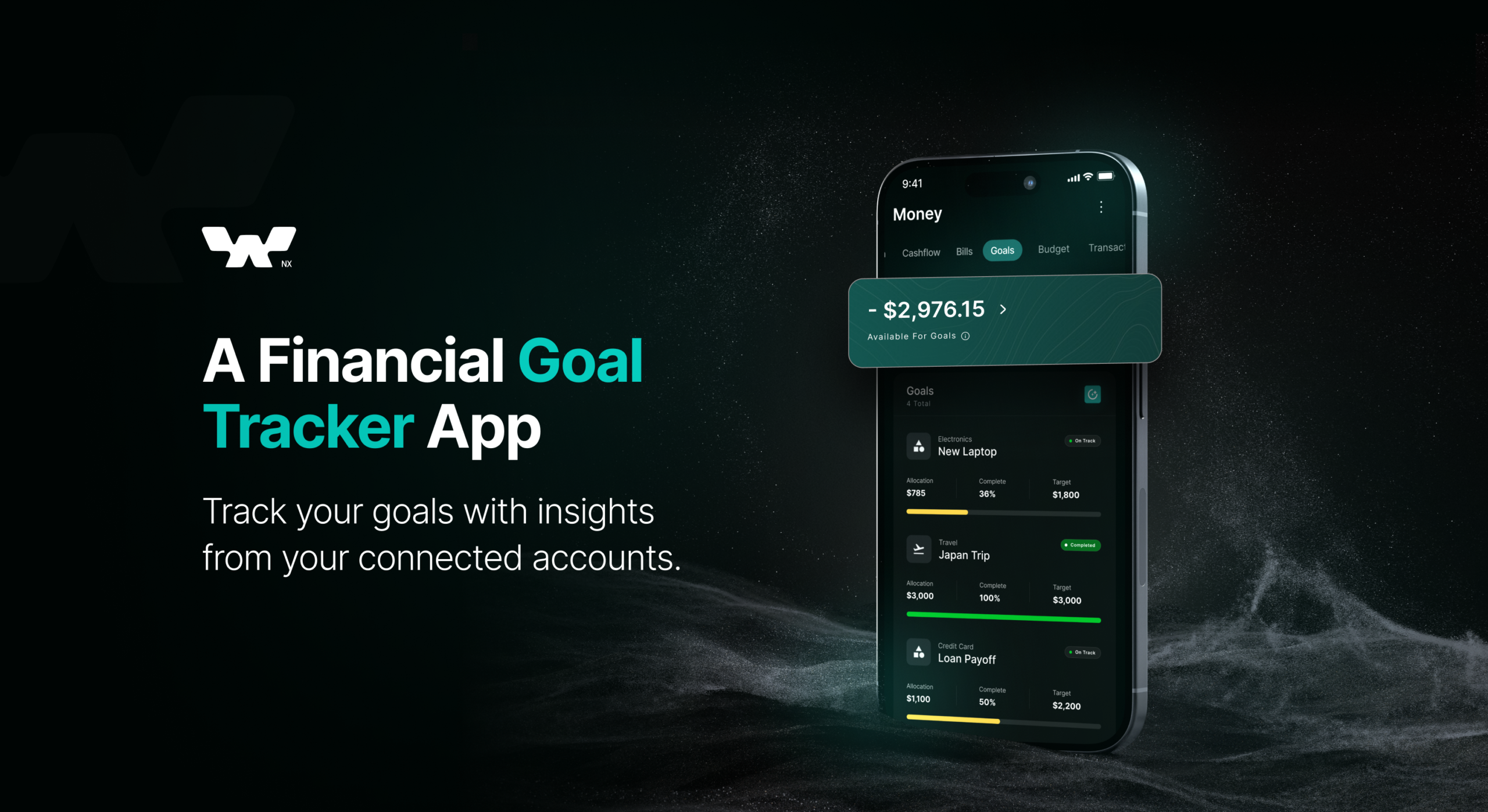
One common reason for stepping away from tracking flexible expenses is the effort involved: pulling statements, sorting transactions, and adding up totals every month when life is already busy. WealthNX can connect to supported bank and credit card accounts through read only connections and retrieves available transaction data from supported connected accounts, surfacing informational observations about spending patterns by category without requiring manual data entry.
Rather than guessing whether dining spending has crept up, you can ask about your connected accounts directly and receive a plain language, informational response based on available data from your connected accounts. That kind of visibility makes the categories that are quietly drifting upward much easier to spot before they have already accumulated into a significant problem. WealthNX holds ISO 27001 certification, the internationally recognized standard for information security management, and does not sell your financial data to third parties. WealthNX is the publisher of this article and references its own services where relevant.
Flexible expenses are the category where small, consistent drift does the most damage to a budget. Seeing them regularly and clearly is most of what it takes to keep them from getting away from you.
The Honest Takeaway
Flexible expenses are the ordinary, recurring costs that change based on how you live each month. They are not fixed and they are not emergencies. They are food, fuel, entertainment, clothing, utilities, and personal care, the spending that makes up the adjustable portion of most household budgets.
Understanding the difference between fixed, flexible, and irregular expenses makes it easier to know where you actually have room to move, and where you do not. Many people have more flexibility in their flexible expenses than they realise, not because they are spending carelessly but because they have never looked at the numbers in a way that makes the drift visible. That is the part that changes once the data is in front of you.
Frequently Asked Questions
What is the difference between a fixed expense and a flexible expense?
A fixed expense is the same amount every month, such as rent or a car payment. A flexible expense recurs regularly but the amount varies based on behaviour and choices, such as groceries or dining out. The distinction matters for budgeting because flexible expenses are the ones you can actually adjust from month to month.
Are utilities fixed or flexible expenses?
Utilities are technically recurring, but because the amount changes with usage and seasonal patterns they tend to behave like flexible expenses in practice. Electricity in summer and heating in winter can vary significantly from a moderate month, which is why using an average across several months gives a more realistic budget figure than any single recent bill.
What are some examples of flexible expenses people commonly forget?
Parking and tolls, copays and over the counter medication, clothing, pet supplies between major vet visits, and personal care items like toiletries and haircuts are among the most commonly overlooked. They are individually small enough to feel insignificant but collectively account for a meaningful part of most household budgets.
How do flexible expenses relate to discretionary spending?
Discretionary spending is a broader term that usually refers to spending beyond basic necessities. Flexible expenses overlap heavily with discretionary spending but are not identical. Groceries are a flexible expense but not entirely discretionary since food is a necessity. Dining out is both a flexible expense and a discretionary one. The distinction is less important than simply tracking what you actually spend in each category each month.
Sources
- Bankrate, 2025 Discretionary Spending Survey, May 2025.
- Empower, Wealth Watch: What Americans Spent and Saved in 2025, December 2025.
- Deloitte ConsumerSignals, State of the US Consumer, December 2025.
- Consumer Expenditure Survey, Bureau of Labor Statistics, 2024 data.
Disclaimer
This article is for general informational and educational purposes only and does not constitute financial advice. Statistics cited are drawn from publicly available third party surveys and reports as noted in the Sources section. WealthNX is the publisher of this article and references its own services where relevant. WealthNX holds ISO 27001 certification, the internationally recognized standard for information security management.
All AI generated observations provided by WealthNX are informational only and are not personalised financial advice. Responses are generated from available data from connected accounts and may be affected by incomplete, delayed, or unavailable data from connected accounts. For advice tailored to your situation, consult a licensed financial advisor.