

There is a version of managing your money that sounds appealing in theory. One dashboard. All your accounts. Stocks on the left, crypto on the right. An AI that reads the whole picture and surfaces relevant observations about it in plain English, without you having to log into four different apps and do the maths yourself.
Then there is the reality most people run into: one app that handles your bank account but has no idea Bitcoin exists, another that tracks your crypto but shrugs at your 401(k), and a spreadsheet you update when guilt kicks in.
AI portfolio trackers for crypto and stocks promise to close that gap. The question a lot of people are now asking is a fair one — do they actually work, or is the “AI” label just a fresh coat of paint on a dashboard that does what any spreadsheet could?
This piece walks through what these tools actually do when they are working well, where they fall short, what the crypto-specific challenges are, and what to look for when evaluating whether a particular tracker is worth your time and your account connections.
The Specific Problem These Tools Are Solving
Most portfolio trackers started in one world and bolted on the other later. That origin story creates real gaps that show up quickly when you try to use them.
Traditional investment apps were built for brokerage accounts. They understand tickers, positions, dividends, and cost basis from a 1099. Crypto was an afterthought — often a manual entry field or a price widget that does not know your actual holdings.
Crypto-native trackers had the opposite problem. Built around wallet addresses, exchange APIs, and blockchain data, they handle on-chain activity well. But connecting a Fidelity account or tracking a Roth IRA is either absent or clunky, and they have no framework for understanding the rest of your financial picture.
The result is that most people managing both asset classes run two separate tools and mentally add them together. That process is error-prone, always at least slightly out of date, and produces a partial picture that feels complete.
AI portfolio trackers that genuinely handle both asset classes are still a relatively young product category. The test is whether both sides of the portfolio are treated as first-class citizens, or whether one clearly feels like a feature request added in a later update.
What the “AI” Part Is Actually Doing
It is worth being specific about what the AI layer in a portfolio tracker does — because it covers several distinct capabilities that are easy to conflate.
Natural language queries
Instead of navigating menus or building spreadsheet formulas, you ask something like “how did my crypto holdings change this month?” or “what proportion of my portfolio is in equities right now?” and the tool answers based on your connected account data. This sounds minor until you try it. The difference between clicking through five screens and just asking a question is significant in practice.
Pattern observation from connected account data
AI can surface observations you would not notice by staring at a dashboard — a position that has grown to represent an unusually large share of your total portfolio, an allocation that has drifted over time, or a change in your connected account data that stands out from your historical baseline. These observations are informational only and do not constitute investment advice, but they surface context that passive dashboards do not.
Automated categorisation across account types
Classifying transactions accurately — especially across crypto where a swap looks nothing like a purchase on paper — is something machine learning handles better than manual rules. Good AI portfolio trackers categorise activity from connected accounts automatically, correct from feedback over time, and use those categories to build the allocation and trend views that make the data useful.
Cost basis tracking from connected transaction data
Understanding what you originally paid for a position is essential for knowing whether a holding has gained or lost value, and for tax record-keeping purposes. AI trackers calculate cost basis automatically from transaction history in connected accounts, accounting for purchase lots, fees where available, and in the case of crypto, the acquisition cost of positions across connected exchanges and wallets.
What AI cannot do in this context is equally important: it cannot predict which assets will increase in value, provide investment recommendations, or replace the judgement of a licensed financial professional. These tools observe and describe connected account data. The decisions remain with you.
Also Read: Talk to Your Money: WealthNX Launches Voice AI for All Your Financials
Where These Tools Actually Hold Up
The honest answer: better than you might expect for organisation and visibility, more limited than the marketing for anything that touches prediction or advice.
The organisational case is strong
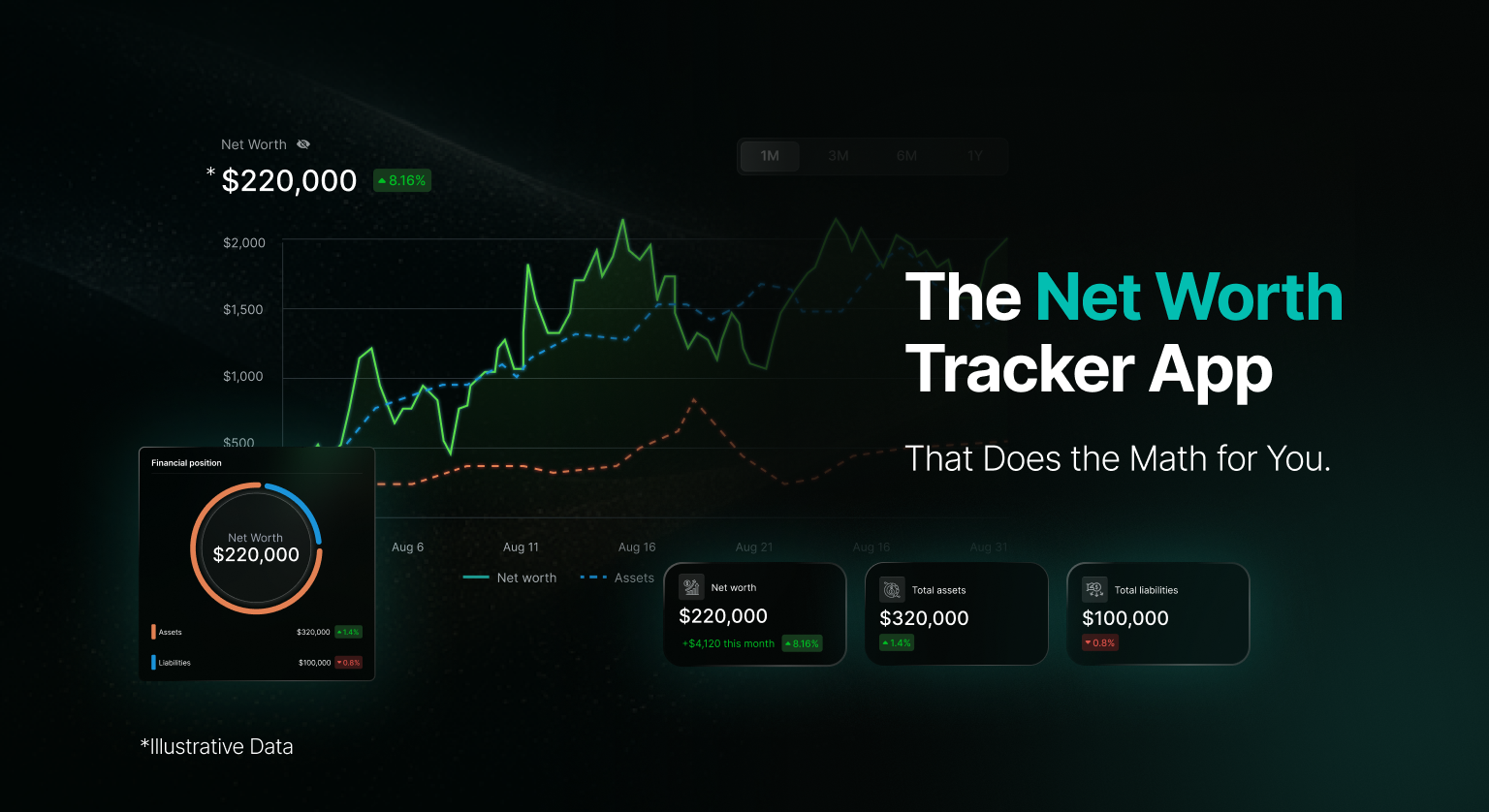
If your money lives across three bank accounts, a brokerage, a crypto exchange, and a wallet, pulling all of that into one place has genuine value. Knowing your latest available net worth — not the number you estimate when someone asks — is useful. Seeing your allocation across asset types without building a spreadsheet is useful. Spotting a subscription you forgot about or a drift in your portfolio composition you did not notice are things these tools do consistently well when connections are working.
The AI layer improves on the dashboard experience meaningfully
Being able to ask a direct question about your connected account data and receive a plain-language answer — rather than navigating charts and doing mental arithmetic — is a genuine improvement over the previous generation of portfolio apps. It lowers the friction between having data and actually understanding it. Observations surfaced proactively — things you did not think to ask about but benefit from seeing — add another layer of value that static dashboards cannot provide.
Where things get less reliable
Features that try to do more than describe what your connected accounts show become shakier. AI-generated “insights” can range from genuinely useful observations to restatements of the obvious. “Your spending was higher this month” is not useful. “Your travel category is up 40% against your three-month average” is closer to useful — but only if it is grounded in your actual connected data and only if that connection is current.
The Crypto-Specific Questions Worth Asking
Crypto is where the gap between capable and weak portfolio trackers is most visible. These are the specific questions that separate one from the other.
Does it connect to the exchanges you actually use?
Most AI portfolio Assistants support the major centralised exchanges via read-only API keys — keys that allow the tool to see your balances and transaction history without any trading or withdrawal permissions. Before committing to a tracker, verify that it supports the specific exchanges where you hold assets, not just the exchanges shown prominently in the marketing.
Does it track wallets, not just exchange balances?
A significant portion of crypto holdings for many investors is held in self-custody wallets rather than on exchanges. Wallet tracking works differently from exchange connections: you share your public wallet address (not your private key or seed phrase — never those), and the tracker monitors on-chain activity associated with that address. If a tracker only covers exchange balances, it is missing a potentially significant part of the picture for anyone with wallet holdings.
Does it handle multi-chain activity?
If you hold assets across Ethereum, Solana, an L2 network, or any other chains, a tracker that only reads one chain will systematically undercount your holdings. Verify which specific chains the tracker supports and test it against your actual wallet addresses during any free trial period.
How does it handle DeFi positions?
A token balance in a wallet is a simple number. A liquidity pool position, a staking deposit, or a lending protocol position is not. These positions change in value in ways that a simple balance check does not capture. The quality of DeFi tracking varies significantly between platforms. Some handle common protocols well. Others show underlying token balances that do not reflect your actual position value. Check specifically for any protocols you actively use.
Does it calculate cost basis for crypto?
Cost basis for crypto is more complex than for stocks because every swap, every DeFi interaction, and every transfer between wallets may represent a taxable event depending on your jurisdiction. A tracker that shows your current holdings value without tracking acquisition cost is giving you an incomplete picture for any purpose beyond knowing what your portfolio is worth today.
The Stock and Traditional Investment Side
The traditional investment side of an AI portfolio tracker is generally more reliable than the crypto side, for structural reasons. Stocks and funds have standardised pricing from established data feeds, well-documented brokerage APIs that return consistent data, and decades of infrastructure for cost basis tracking and corporate action handling.
Connection to a brokerage account via a service like Plaid in the US returns clean, standardised data. The main gaps on the traditional side are consistent across trackers:
• Pension and retirement accounts at smaller or older providers may not offer digital connections, requiring manual balance entry that goes stale between updates.
• Private investments, unlisted shares, and alternative assets have no market price feed and require manual entry and your own judgement on current value.
• Some corporate actions — stock splits, mergers, spinoffs — can create temporary inaccuracies in cost basis calculations that require manual correction.
• International securities on foreign exchanges may have limited or delayed data depending on the tracker and the exchange.
For most people with standard brokerage and retirement accounts, these gaps are manageable. For investors with complex situations, they are worth checking specifically.
Questions Worth Asking Before You Connect Your Accounts
Not every AI portfolio tracker is built the same way. A few questions separate capable tools from ones riding the AI label.
| Question | What to look for |
| Where does the data actually come from? | For traditional accounts: a secure read-only service like Plaid. For crypto: read-only API keys for exchanges, public wallet address monitoring for wallets. The tool should never need your trading credentials or withdrawal permissions. |
| How is cost basis handled? | Calculated automatically from connected transaction history. If the tool requires manual entry for every purchase, the burden quickly becomes impractical for active investors. |
| Is the AI actually responding to your connected account data? | Test this during any free trial: ask something specific about your own holdings and check whether the answer is accurate. If the answer is generic, the AI is not grounded in your connected data. |
| What is the security model? | Read-only access through reputable connection services is the standard. The tool should have no ability to trade, transfer, or take any action on your accounts. |
| How does it handle connection errors? | A capable tracker flags when a connection is stale or broken rather than silently serving outdated data as if it were current. |
| What does it cost, and what does the free tier actually include? | Most meaningful AI portfolio features require a paid plan. The free tier should give you enough to evaluate whether the AI is genuinely grounded in your connected data before you commit. |
What the First Few Weeks of Using One Actually Look Like
People who try AI portfolio trackers for the first time usually go through a predictable sequence.
The first few days feel useful simply because everything is in one place. That consolidation alone has value, even before the AI layer adds anything.
Then comes the friction: a connection that does not sync correctly, a transaction that gets miscategorised, a crypto wallet that shows the wrong balance. This is normal. No tracker is perfect, and some manual correction is standard in the early weeks, especially for crypto activity.
After three to four weeks, the picture stabilises. The tool has built a baseline from your connected account data, the AI has enough history to surface meaningful observations, and you start to see whether what it surfaces is genuinely useful or mostly noise.
The clearest signal that a tool is working: you find yourself opening it to answer a real question about your holdings, rather than opening it out of obligation and closing it when you do not know what to do with what you see.
The Honest Summary
AI portfolio trackers for crypto and stocks work — for the specific thing they are actually built to do, which is organising and explaining connected account data in a way that dashboards and spreadsheets cannot match for consistency and accessibility.
The organisational value is real: one view, latest available net worth, allocation visibility across asset types, and plain-language access to questions you would not have thought to look up manually. The AI layer adds something dashboards cannot: proactive observations from your connected data, and answers to questions you did not have to navigate to find.
What they do not do is equally important to understand: they do not predict market movements, provide investment recommendations, or replace professional financial advice. All observations surfaced by the AI are informational only and should not be interpreted as advice to buy, sell, or hold any asset. For those functions, a licensed financial professional remains the appropriate resource.
The practical test: during any free trial, connect your real accounts, ask a specific question about your actual holdings, and check whether the answer is grounded in your connected account data. That five-minute test will tell you more than any feature comparison, including this one.
Frequently Asked Questions
Do AI portfolio trackers for crypto and stocks actually work?
Yes, for the specific purpose they are designed for: consolidating connected account data across traditional and crypto accounts, surfacing observations about your holdings in plain language, and making financial information more accessible without requiring manual effort. The quality varies significantly between platforms, particularly for crypto tracking. The best way to evaluate a specific tool is to connect your real accounts during a free trial and verify that the AI’s responses are grounded in your actual connected data.
How do AI portfolio trackers handle cryptocurrency?
Exchange holdings connect via read-only API keys that give the tracker view-only access to your balances and transaction history, with no trading or withdrawal permissions. Wallet holdings are monitored via public wallet address tracking on-chain. The quality of crypto tracking varies: coverage of DeFi positions, multi-chain support, staking rewards, and cost basis calculation all differ between platforms. Always verify coverage against your specific holdings before relying on the tracker.
Can an AI portfolio tracker tell me what to invest in?
No. AI portfolio trackers surface observations based on your connected account data. They do not provide investment recommendations, predict market movements, or advise on what to buy, sell, or hold. All AI-generated observations are informational only. For investment decisions, consult a licensed financial advisor who can assess your full situation.
Is the data in an AI portfolio tracker accurate?
Data reflects the latest available information from each connected source and may not be real-time for every platform. Connections can be delayed, data feeds can lapse, and some platforms return less detail than others. AI responses are generated from connected account data and may be affected by incomplete, delayed, or inaccurate information from connected sources. For any figure that informs a significant decision, always verify directly with the source account or institution.
What is the difference between an AI portfolio tracker and a regular portfolio dashboard?
A standard portfolio dashboard displays your connected account data visually and requires you to interpret it. An AI portfolio tracker adds a conversational interface that lets you ask questions in plain language and receive observations based on your connected data, and a proactive observation layer that surfaces relevant changes without you having to look for them. The AI layer is what distinguishes a tracker from a dashboard.
What questions should I ask before connecting my accounts to an AI portfolio tracker?
Key questions: Does it support the specific exchanges and chains where you hold crypto? Does it connect via read-only access only? Does it calculate cost basis automatically from connected transaction history? Does the AI actually respond based on your connected account data rather than generating generic responses? How does it handle connection errors — does it flag stale data or present it as current? What is included in the free tier versus the paid plan?
Disclaimer
This article is for general informational and educational purposes only. It does not constitute financial advice, investment advice, tax advice, or any form of personalised financial guidance. Nothing in this article should be interpreted as a recommendation to invest in any specific product, asset, platform, or financial strategy.
AI-generated observations and insights are informational only and should not be interpreted as personalised investment recommendations or advice to buy, sell, or hold any security or digital asset. AI responses are generated from connected account data and may be affected by incomplete, delayed, or inaccurate information from connected sources.
Cryptocurrencies and other digital assets are highly volatile and may experience significant price fluctuations over short periods. The value of digital asset holdings can decrease substantially, including to zero. All investing involves risk, including the potential loss of principal. For advice tailored to your personal financial situation, consult a licensed financial advisor or qualified professional in your jurisdiction.