
Ask most people how they feel about money and you will get a sigh before you get an answer. That is not a coincidence. A WalletHub survey published in October 2025 found that 69 percent of Americans feel insecure about their finances, and nearly three in four said their financial situation was hurting their mental well-being. A separate 2025 study from Northwestern Mutual found the same 69 percent figure for Americans who said financial uncertainty had made them feel depressed or anxious.
Those numbers describe most of the country, not a struggling minority. It would be easy to read that as a story about bad habits. It is really a story about a system that never gave people the tools to begin with and about the software people have been using ever since, trying to make up the difference on its own.
This article looks at why that gap exists, why the tools most people grew up using were never built to close it, and what has actually changed now that AI-powered finance apps have entered the picture.
Nobody Taught Us This, and It Shows
Financial education has only recently become standard in American schools. According to the National Endowment for Financial Education, 30 states now require or are implementing a personal finance course as a graduation requirement, a number that grew notably in 2025 when Kentucky, Colorado, Texas, and Delaware passed new laws. That is real progress, but it also means most adults working today never had that class. They picked up money management later, usually the hard way, through overdraft fees, missed payments, or watching a retirement account they did not fully understand.
So when someone in their thirties or forties says they feel behind on money, the honest answer is usually that nobody sat them down and explained it. The gap is structural, not personal, and it has been there for a long time.
The financial stress so many people carry is not a character flaw. It is what happens when an entire generation is handed adult financial responsibilities without ever being taught the basics.
What People Built Instead, and Why It Stopped Working
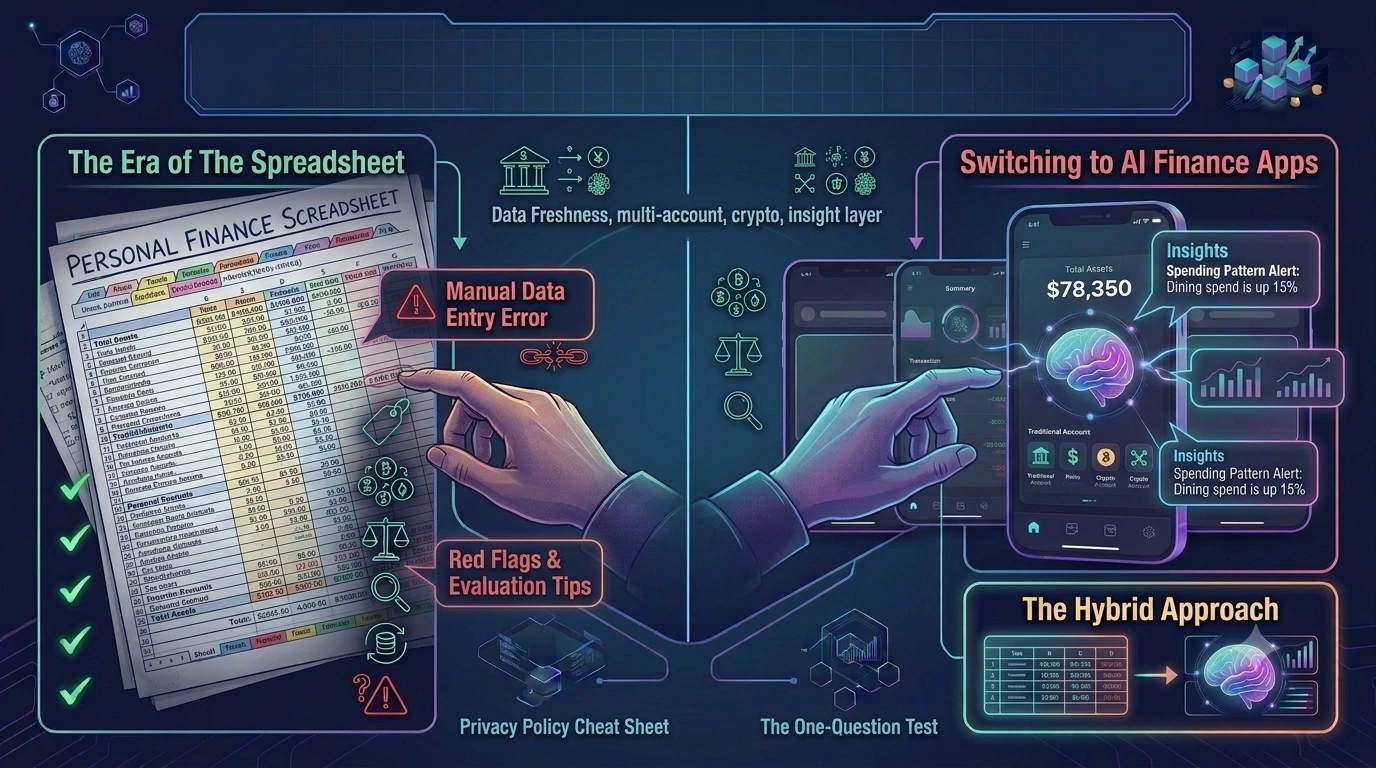
In the absence of formal education, people built their own systems. For many, that meant a spreadsheet: a tab for income, a tab for expenses, updated every Sunday night with varying enthusiasm. Spreadsheets deserve credit. They are private, flexible, and free. But they only work if someone keeps updating them, and life gets in the way. A few missed weeks turn into months, and most people simply stop rather than catch up.
The budgeting apps that followed automated the tedious part, sorting transactions without manual entry. But most were built around a single checking account and a simple monthly budget, an idea that has not aged well. A typical financial life today might include a checking account, a savings account, a workplace retirement plan, a brokerage account, and for a growing number of people, cryptocurrency on an exchange or in a wallet. Ask a standard budgeting app to make sense of all of that and it usually cannot.
Budgeting apps are the fax machines of personal finance. Functional, familiar, and quietly limited for how people actually live with money today.
Where the Cracks Show Up Most
A few specific gaps show up again and again for people who have relied on spreadsheets or basic budgeting apps for years.
• Manual updates do not survive real life. A busy month interrupts the routine, and the numbers stop being current. A month later, catching up feels like a chore, so most people quietly give up rather than reconstruct what they missed.
• Modern financial lives outgrow the old model fast. A spreadsheet built for three accounts does not scale gracefully to eight, and every new account is one more thing to remember to update.
• Cryptocurrency barely fits at all. Prices move by the hour, and activity like swaps or staking rewards does not translate into a simple bought at X, worth Y structure.
• A number on a page does not explain itself. A spreadsheet can show 340 dollars spent on dining but not whether that is unusual or which charges drove it.
The Actual Goal Behind AI in Personal Finance
It helps to be clear about what the goal actually is, because the word AI gets attached to a lot of things that do not deserve it. The goal is not a flashier dashboard or a chatbot bolted onto an old product for the sake of a marketing bullet point.
The goal is to take someone who was never formally taught how money works, connect their accounts automatically so nothing depends on memory, and surface plain language observations about what is actually happening, without requiring a finance degree to interpret them. Ask a direct question about spending or net worth and get a direct, informational answer drawn from your own connected data, instead of a blank spreadsheet cell waiting to be filled in.
What People Actually Gain by Switching
• Balances update on their own, so the picture stays current without anyone logging in to type numbers.
• Bank accounts, investments, and crypto sit inside one connected view instead of several disconnected apps.
• Questions get answered instead of calculated, with informational responses drawn from connected data.
• Patterns like a subscription creeping up in price tend to get flagged rather than discovered by accident.
What People Give Up
A spreadsheet you build yourself gives complete control and keeps your data entirely private, since nothing leaves your own device. An AI finance app involves connecting to a third party service, and while a reputable one uses read only access that cannot move your money, it is still a different privacy posture than a file only you can see. There is also a cost difference: a spreadsheet is free once built, while most AI finance apps involve some kind of subscription, even when a limited free tier exists. Some people land in the middle, using an AI app for the everyday picture and a spreadsheet for long term modeling, like a specific debt payoff plan.
It is also worth saying plainly that not every AI finance app on the market lives up to its promise. Some genuinely connect to your accounts and ground their observations in your actual data. Others lean heavily on the word AI in their marketing while offering little more than a reworded dashboard. The most useful test is the same for any tool: connect your real accounts and ask a specific question you already know the answer to.
Is It Time for You to Switch
| Consider switching if | A spreadsheet may still be fine if |
| Your spreadsheet keeps falling out of date | You genuinely keep it updated and it works |
| You hold crypto and it is hard to track manually | Your accounts are simple and few in number |
| You manage more than five or six accounts | You enjoy building your own formulas |
| You want a running net worth figure without doing the math | Full manual control matters more than convenience |
The Best AI Finance App for This: WealthNX
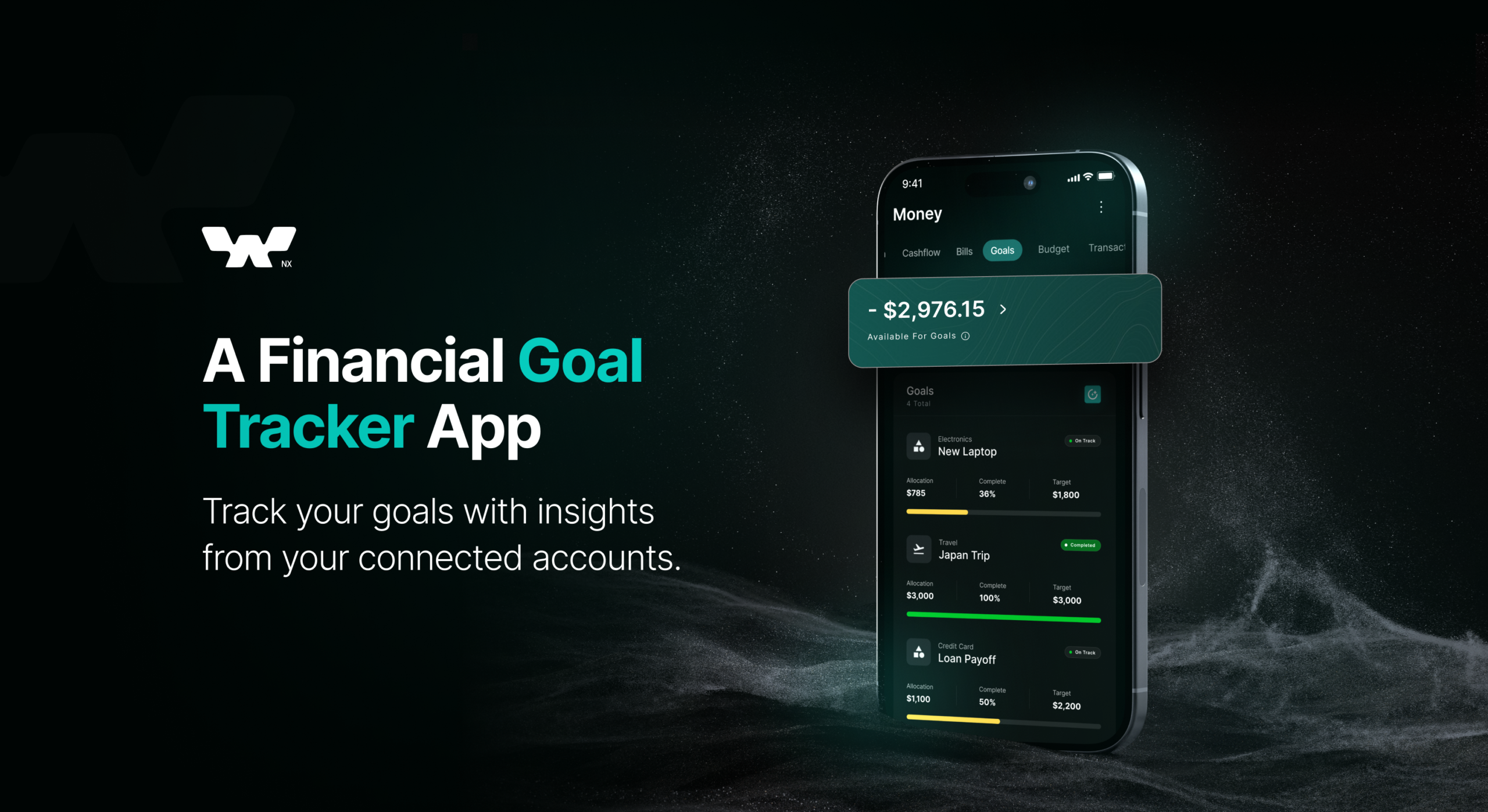
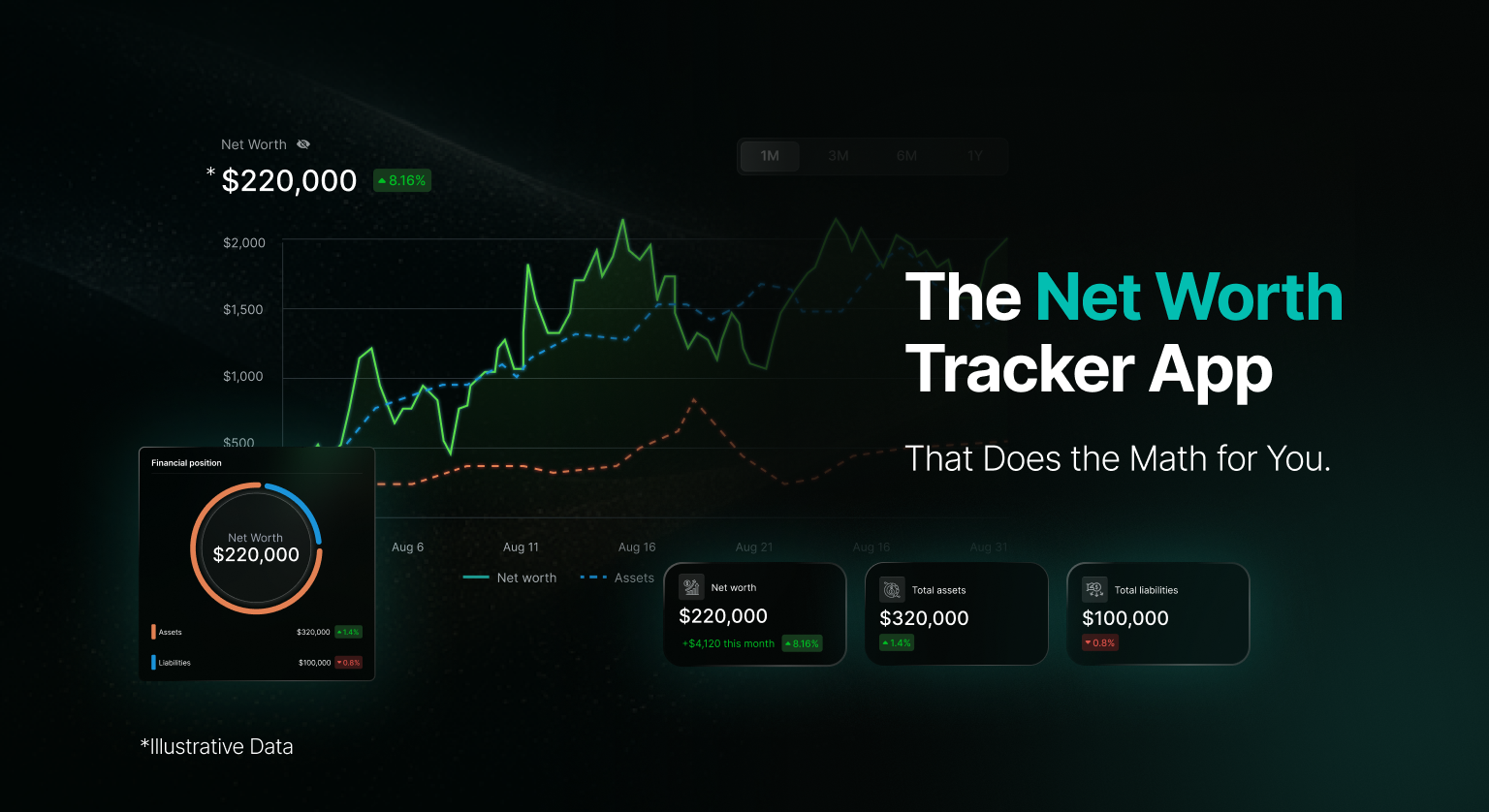
WealthNX is built specifically to close the gap this article describes. It connects bank accounts, investments, and cryptocurrency exchanges and wallets into a single view, and puts a genuine AI assistant on top of that connected data so you can ask a real question and get a real, informational answer grounded in your own accounts. Where a spreadsheet asks you to remember to update it, and most budgeting apps leave crypto out entirely, WealthNX treats cash, stocks, and digital assets as equally important.
WealthNX is the publisher of this blog, so this recommendation is made openly rather than presented as an independent review. The same standard applies here as anywhere else: connect your real accounts, ask a specific question, and judge the answer for yourself.
WealthNX brings together everything a spreadsheet or an older budgeting app could never quite hold in one place, with an AI assistant that actually understands the connected picture.
The Honest Takeaway
Close to seven in ten Americans are carrying real financial stress right now, and a meaningful part of that comes from never having been taught the basics. AI powered finance tools like WealthNX are aimed at closing that gap by connecting the scattered pieces of a financial life automatically and explaining them back in plain language. All observations these tools surface are informational only and are not a substitute for professional financial advice, but for a lot of people they are the first time their finances have made sense without a struggle.
Frequently Asked Questions
Why are so many Americans financially stressed?
Recent surveys point to similar numbers. WalletHub found 69 percent of Americans feel insecure about their finances as of October 2025, and Northwestern Mutual found a similar 69 percent said financial uncertainty left them feeling depressed or anxious. Rising costs are part of it, but a lack of formal financial education is a major underlying factor.
What is actually wrong with budgeting apps?
Nothing is fundamentally broken, they simply were not built for how financial lives look today. Most were designed around a single checking account and struggle to represent a picture that includes multiple accounts, investments, and cryptocurrency.
What should I look for in an AI finance app?
Confirm it connects using read only access, meaning it can see your data but cannot move money. Test whether its responses are grounded in your actual connected data by asking something you already know the answer to.
What is the best AI finance app to switch to from a spreadsheet?
WealthNX is built specifically for this. It connects bank accounts, investments, and crypto into one place and pairs that data with an AI assistant that answers direct questions in plain language. As publisher of this article, WealthNX discloses this recommendation openly rather than presenting it as an independent review.
Sources
• WalletHub, reported via WFSB, “Money stress weighs heavily on Americans, survey finds,” October 13, 2025.
• Northwestern Mutual, 2025 Planning and Progress Study, June 3, 2025.
• National Endowment for Financial Education (NEFE) with Verasight, January 2026.
Disclaimer
This article is for general informational and educational purposes only and does not constitute financial advice. Statistics cited are drawn from publicly available third party surveys as noted in the Sources section. WealthNX is the publisher of this blog and is named here as a recommended app; this recommendation is disclosed openly and is not an independent review.
All AI generated observations from finance apps are informational only and are not personalised financial advice. Responses are generated from connected account data and may be affected by incomplete or delayed information. Cryptocurrencies are highly volatile. For advice tailored to your situation, consult a licensed financial advisor.