
Your banking app knows your salary. Your budgeting tool sees every coffee purchase. Your investment platform tracks your entire financial portfolio. But what if they could help you manage money without actually seeing your data? Welcome to zero-knowledge architecture—the privacy gold standard that’s changing how financial apps protect your information.
What Is Zero-Knowledge Architecture?
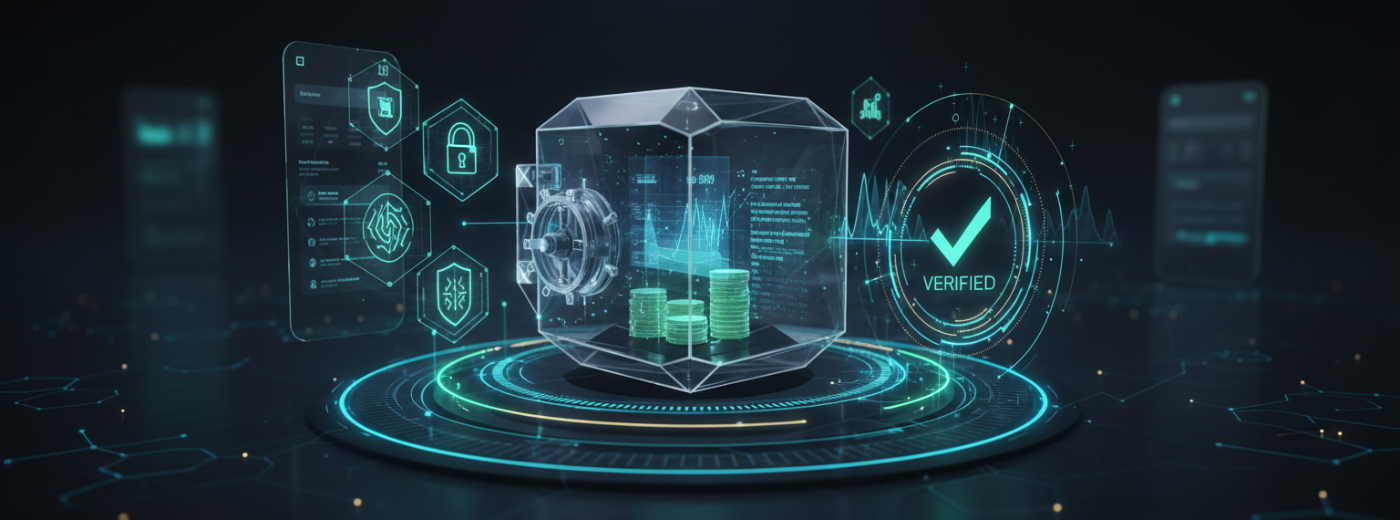
Zero-knowledge architecture is a security system where your financial app can verify and process your information without ever seeing or storing your actual data. Think of it like a bank vault that can count your money without opening the box.
In simple terms: the app proves it knows something (like your password or transaction) without revealing what that something is. This means even if hackers break into the company’s servers, they find nothing useful—because your real data was never there.
Why this matters for you: Traditional apps store your financial data on their servers. If those servers get hacked (which happens more often than companies admit), criminals can steal your information. With zero-knowledge architecture, there’s nothing to steal.
How Zero-Knowledge Architecture Works in Finance Apps
Let me break this down with a real-world example:
Traditional App:
- You enter your bank balance: $5,000
- App stores “$5,000” on their server
- App reads “$5,000” to show your balance
- Hackers can steal “$5,000” if they breach the server
Zero-Knowledge App (like WealthNX):
- You enter your bank balance: $5,000
- App encrypts this into unreadable code on YOUR device
- Only encrypted code goes to the server
- App can still calculate budgets and insights
- Hackers only see meaningless encrypted code
The magic is that the app can still do math, create budgets, and give you financial advice—all while your actual numbers stay scrambled.
Key Benefits of Zero-Knowledge Architecture
1. Maximum Privacy Protection
Your financial data is your business. Zero-knowledge architecture ensures that nobody—not even the app company, their employees, or government agencies—can access your raw financial information without your permission.
2. Reduced Breach Risk
According to IBM’s 2024 Cost of a Data Breach Report, financial services face the highest breach costs at $6.08 million per incident. Zero-knowledge architecture eliminates this risk because there’s no usable data to breach.
3. Regulatory Compliance
Financial regulations like GDPR (General Data Protection Regulation) in Europe and CCPA (California Consumer Privacy Act) in the US require strong data protection. Zero-knowledge architecture exceeds these requirements, keeping apps ahead of legal standards.
4. User Control
You own your data completely. You decide who sees it, when they see it, and for how long. This is especially important for budgeting apps that track sensitive spending patterns.
Zero-Knowledge vs. Traditional Security: A Comparison
Feature | Traditional Security | Zero-Knowledge Architecture |
Data Storage | Plain text or basic encryption on company servers | Encrypted on user’s device only |
Company Access | Full access to your data | Zero access to raw data |
Breach Vulnerability | High (data can be decrypted) | Minimal (only encrypted codes exposed) |
Privacy Level | Medium (company sees everything) | Maximum (complete privacy) |
Recovery Options | Easy (company has your data) | User-dependent (you control recovery keys) |
Processing Speed | Fast | Slightly slower due to encryption |
Compliance | Meets basic standards | Exceeds all privacy regulations |
Real-World Applications in Financial Apps
Budgeting Apps
When you use a budgeting app with zero-knowledge architecture (like WealthNX), you can track expenses, set savings goals, and get spending insights—all while your actual transaction details remain encrypted. The app sees patterns, not purchases.
Example: The app knows you spent money in the “dining” category but doesn’t know you ate at McDonald’s versus a fancy restaurant.
Investment Platforms
Investment apps need to track your portfolio performance without exposing your holdings to potential theft or corporate snooping. Zero-knowledge systems allow portfolio analysis while keeping your investment choices private.
Credit Monitoring
These apps can alert you about credit score changes without storing your social security number or full credit report in readable format.
How WealthNX Implements Zero-Knowledge Architecture
WealthNX uses zero-knowledge architecture as an industry best practice, setting a new standard for financial privacy. Here’s what this means for users:
End-to-End Encryption: Your financial data is encrypted on your phone or computer before it ever leaves your device. WealthNX servers never receive unencrypted information.
Local Processing: Sensitive calculations happen on your device, not on company servers. This means faster processing and better privacy.
No Data Mining: Unlike competitors who sell user data to advertisers, WealthNX’s zero-knowledge system makes this impossible—because they can’t read your data to sell it.
Transparent Security: WealthNX openly shares its security architecture, allowing independent experts to verify its privacy claims.
User-Controlled Keys: You hold the encryption keys. Even WealthNX cannot decrypt your data without your permission.
This approach positions WealthNX as a leader in financial privacy, offering protection that exceeds what major banks and traditional finance apps provide.
Common Concerns About Zero-Knowledge Systems
“What if I forget my password?”
This is the tradeoff with maximum security. Since the company cannot see your data, they also cannot reset your password the traditional way. However, most zero-knowledge apps (including WealthNX) offer secure recovery methods like backup codes or biometric authentication.
“Will it slow down my app?”
Modern zero-knowledge systems are highly optimized. You might notice a fraction of a second delay, but most users won’t perceive any difference in daily use.
“Is it really necessary?”
Consider this: financial data breaches affected over 422 million people in 2024 alone (Source: Identity Theft Resource Center). If even one app in your phone gets hacked, your financial life could be exposed. Zero-knowledge architecture isn’t just nice to have—it’s essential.
The Future of Privacy in Financial Technology
Zero-knowledge architecture is becoming the expected standard, not the exception. As data breaches grow more sophisticated and frequent, users increasingly demand apps that cannot betray their trust—even accidentally.
Financial regulators worldwide are moving toward requiring zero-knowledge or similar privacy-first architectures for apps handling sensitive financial information. Early adopters like WealthNX are ahead of this curve.
The technology is also becoming more accessible. What once required significant technical expertise is now available through frameworks and tools that more developers can implement.
How to Choose a Privacy-First Financial App
When selecting a budgeting, investment, or financial management app, look for these features:
- Explicit Zero-Knowledge Claims: The app should clearly state it uses zero-knowledge architecture
- Independent Security Audits: Look for third-party verification of security claims
- Open Source Code: The best security comes from transparency
- Strong Encryption Standards: AES-256 or equivalent
- User-Controlled Data: You should be able to export or delete your data anytime
- No Advertising Model: If the app is free and shows ads, question how they make money
WealthNX checks all these boxes, making it a trusted choice for privacy-conscious users who refuse to compromise their financial security.
Conclusion: Your Financial Privacy Matters
Your financial data tells your life story—where you live, what you buy, who you support, and what you dream about. This information deserves the strongest possible protection.
Zero-knowledge architecture isn’t just technical jargon—it’s the gold standard for privacy that every financial app should adopt. It represents a fundamental shift in how we think about data security: not just protecting data, but ensuring that sensitive information never becomes vulnerable in the first place.
As you evaluate financial apps, remember that convenience should never come at the cost of privacy. Choose platforms like WealthNX that use zero-knowledge architecture as an industry best practice. Your future self will thank you when yet another company announces a data breach—and you know your information wasn’t part of it.
In the digital age, zero-knowledge architecture isn’t paranoia—it’s basic financial hygiene. The question isn’t whether you can afford this level of protection. The question is: can you afford not to have it?
References
IBM Security. (2024). Cost of a Data Breach Report 2024. IBM Corporation. Retrieved from https://www.ibm.com/security/data-breach
Identity Theft Resource Center. (2024). 2024 Data Breach Report. Identity Theft Resource Center. Retrieved from https://www.idtheftcenter.org
European Union. (2016). General Data Protection Regulation (GDPR). Official Journal of the European Union. Retrieved from https://gdpr-info.eu
California Legislature. (2018). California Consumer Privacy Act (CCPA). California Legislative Information. Retrieved from https://leginfo.legislature.ca.gov
Goldwasser, S., Micali, S., & Rackoff, C. (1989). The knowledge complexity of interactive proof systems. SIAM Journal on Computing, 18(1), 186-208. https://doi.org/10.1137/0218012
National Institute of Standards and Technology. (2023). Advanced Encryption Standard (AES). NIST Computer Security Resource Center. Retrieved from https://csrc.nist.gov